
Tiny Talk #5: Where Be the Treasure? A Simple Guide to Journey Mapping for Tiny Business Owners & Nonprofits
Welcome back to Tiny Talks!
If you’re new here: Welcome! Tiny Talks is a no-fluff, 45-minute blend of strategy + community for tiny business owners, creatives, neurodivergent folks, and anyone who’s doing marketing on their own terms.
Each Tiny Talks features one tactical talk (like SEO or website structure), one strategy or mindset shift (like time management or content planning) and real folks working in tiny businesses or nonprofits sharing what’s actually working for them.
Originally recorded on November 12, 2025. Lightly edited for clarity + camaraderie.
This month’s talk is all about client journey mapping… or, as I like to think of it: “Where Be the Treasure?”
Because when you’re a service provider or a nonprofit, getting people to do the thing (sign up, donate, book, attend) often feels like a mystery. This talk helps you crack the map.
📺 Watch the full replay here:
👉 Watch on YouTube
Or, read on for a recap of the event!
You might want to keep an eye on my newsletter…

Lark Frazier (that’s me!)
Web Designer, Digital Educator & so much more!
So, What Is a Client Journey Map?
In the land of software and UX design, a journey map can get real complicated. Think flowcharts with “awareness,” “loyalty,” and “advocacy” arrows looping all over the place. But if you’re a tiny biz, you probably don’t have a full-time UX team—or time for a color-coded Notion board that eats your lunch break.
So here’s Lark’s version:
A journey map is just asking, “How do people get from where they are to where I want them to be?”
That’s it. No jargon. No spreadsheets. No AI. Just good, old-fashioned thinking + sticky notes.
Real-Life Example: A Nonprofit Monthly Meeting
Let’s say you run a neighborhood nonprofit (hi, Candace 👋), and you want more people at your monthly meetings. The journey map might look like:
They hear about you (flyer, postcard, word of mouth).
They go to your website.
They email the board to get the Zoom link.
You email them back manually.
They get a reminder (if you remember to send one).
Then they attend the meeting.
And you’re sitting there thinking: why does this feel clunky?
Answer: because it is. But once you see it mapped out, you also see where to tweak. Like—what if they didn’t have to email the board at all? What if they just joined a newsletter list, and you could batch-send reminders with one click?
That’s the treasure: less work for you, better access for them.
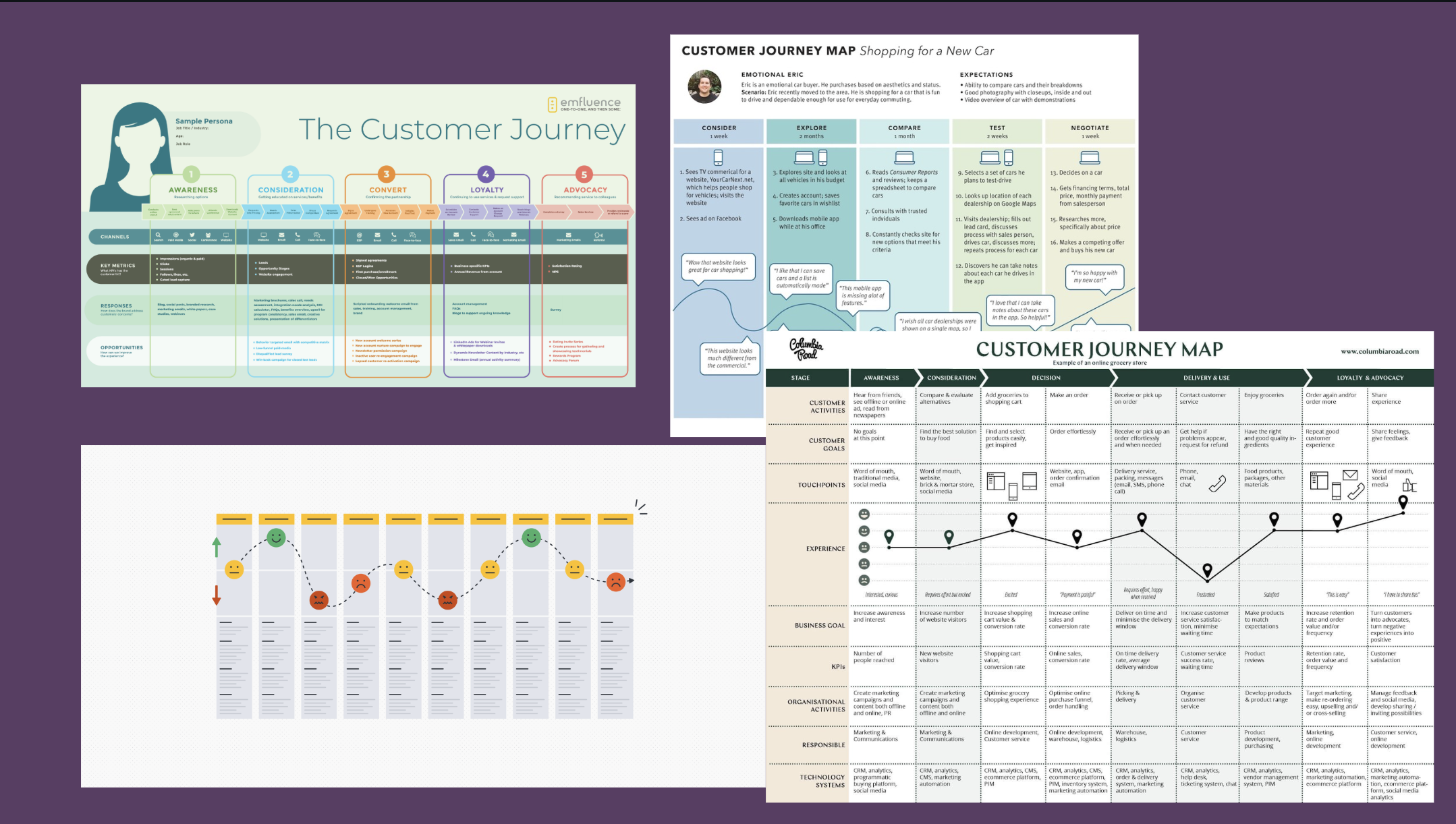
Customer Journey Mapping can look like this.
Complicated, fancy, polished… confusing.
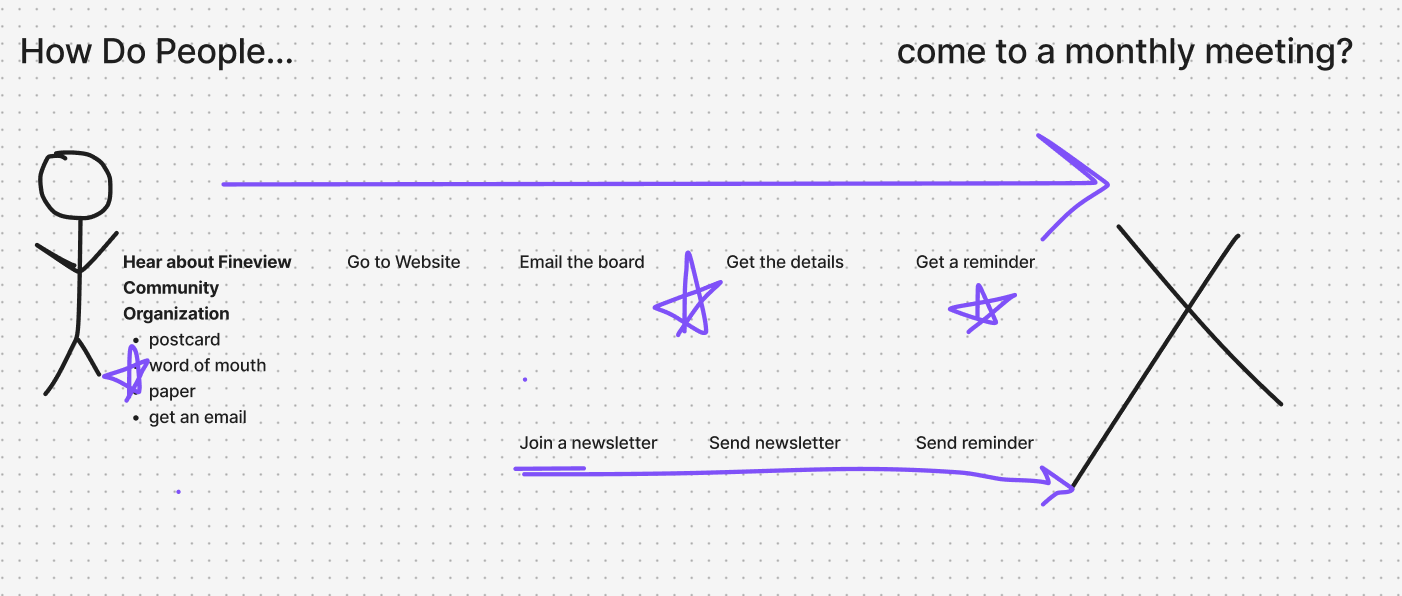
But it can also look like this!
Simple! Easy! Intuitive! Maximally impactful in just a few minutes!
Example Two: Sidekick Sessions
Now let’s say you’re me, and you’re trying to make it easier for people to book one-hour Sidekick Sessions on your site. My original flow looked like this:
People hear about the session (hopefully).
They visit my website.
They find the session in my “store” (already a friction point).
They add it to the cart.
They check out.
I email them to schedule manually.
They schedule.
We meet.
I forget to ask for a review. 😅
That’s a lot of little manual steps. And every one is an opportunity for someone to fall off the map. So I streamlined:
Now, checkout triggers an automated email with my calendar link.
They schedule themselves.
They get a Zoom invite and a reminder.
I get an email too.
Afterward, I’ve built in a thank-you email that asks for a review or referral.
Automation isn’t just about saving time. It’s about reducing energy drains. And that’s good for everybody!
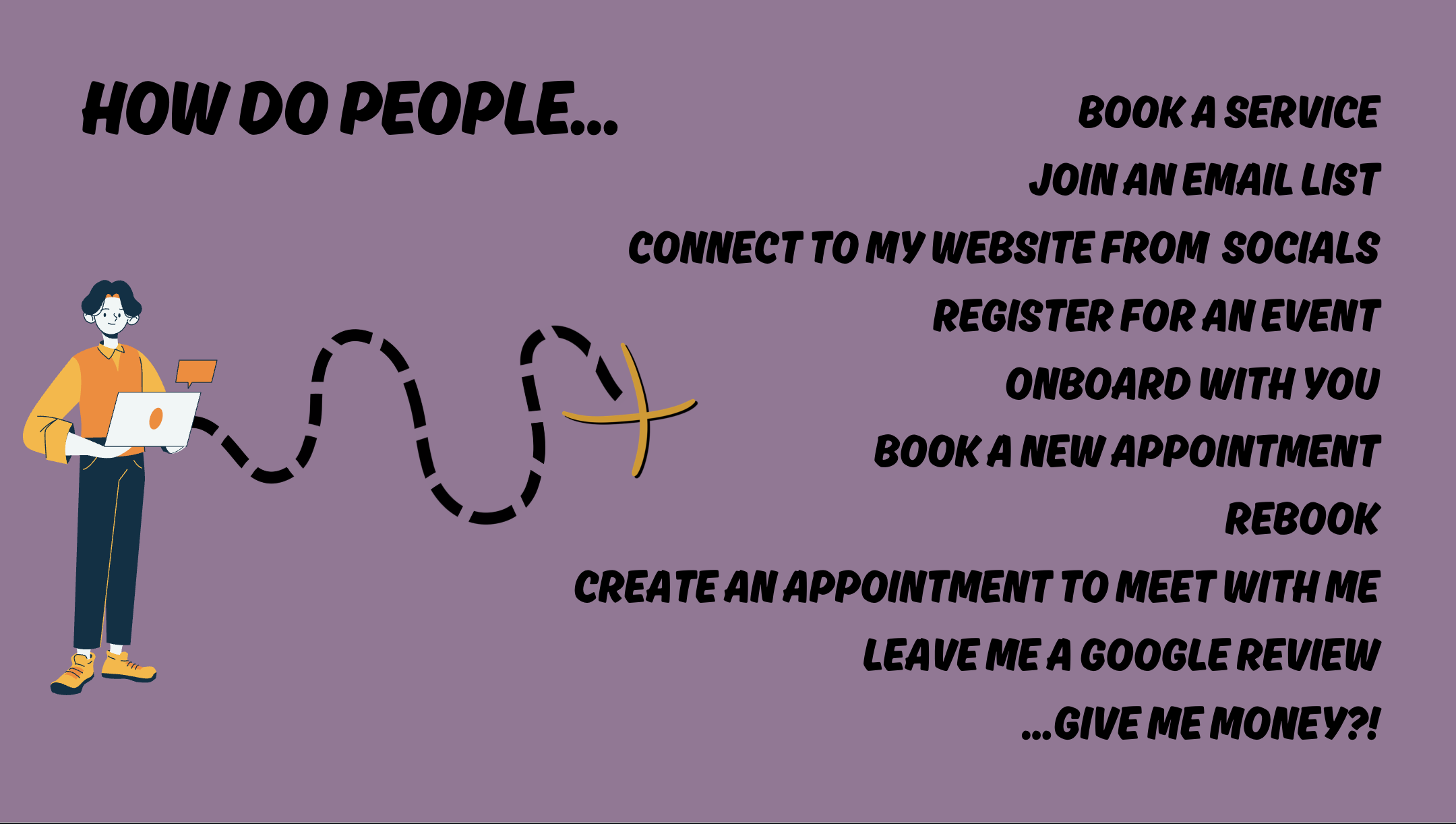
The basic idea…
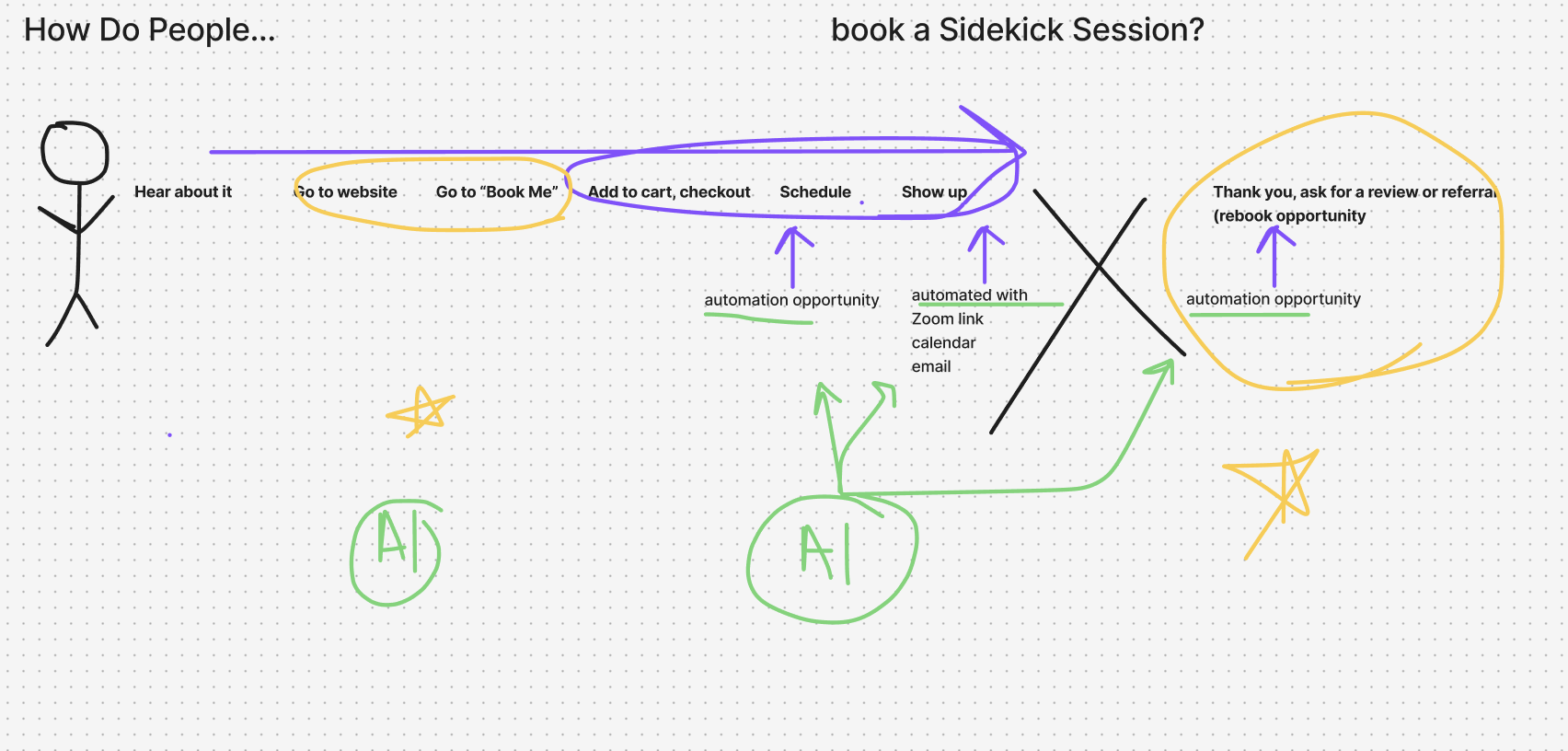
To a real life example. Not so bad!
Hot Tips from the Talk
🌟Every part of your business has a system. Even if it’s a messy one.
🌟 Start by asking: “How do people ___?” (Fill in the blank.)
🌟 Look for bottlenecks: where things get stuck, languish for days (or longer), or where you’re dreading the work load. Where are you doing things manually? Are they the same things over and over every time? Could automation or AI help?
🌟 Don’t forget the first step: people have to hear about it. (Seriously. This one gets skipped all the time.)
🌟 Add real calls to action. Saying “here’s my site” isn’t the same as “click here to register for the next event.”
🌟 Think like someone who’s never been on your site before and has NEVER heard of you before. (Be your own mystery shopper.)
Bonus: Real Automation in Action
Emily Marvin (shoutout!) has one of the most beautifully neurodivergent-friendly systems I’ve seen:
Her dog grooming clients get a reminder to rebook every 5 weeks.
She pre-books for the entire next year in October.
And—most importantly—she builds in vacation and sick days before the year starts.
She was really worried about creating a system at the beginning of her business that would keep working as a solopreneur manageable for her. And she did it!
The best part is that it’s planning with kindness. For clients and for herself.
Try This
Grab a piece of paper (yes, paper). Ask:
“How do people [book a call / attend my event / give me money]?”
Draw a little stick figure at the start. Draw an X at the finish line.
Fill in each and every step that has to happen (either that the client has to take, or that you do).
Star the parts where you are doing something manually or that’s causing a problem.
Then ask:
Could this be easier?
Could this be clearer?
Could this be automated?
Welcome to journey mapping, tiny-biz style.
Wanna Keep This Going?
I’d love to have you in the Awesome Websites Membership. It’s packed with 5–10 minute micro-lessons on websites, marketing, automation, and—coming soon—productivity for tiny biz brains.
Watch. Read. Do.
Use code TINYTALKS for $10 off your first month.
✨ Join the membership ✨
Ready to Level Up?
Whether you’re dreaming up a business, starting fresh, or finally tackling those website updates- I'm here for yah.
Let’s find your next step, together.
💬 Book your free 30-minute Intro Chat—no pressure, just good vibes and clear ideas. I can’t wait to hear what you’re working on!

Keywords: Small business website, Business website design, DIY web design, Small business web design, Website for small business, Online presence for small business, Build trust with clients, Social media vs website, Tell your business story online, Squarespace web design, Website benefits for small business, Website strategy for small businesses
